
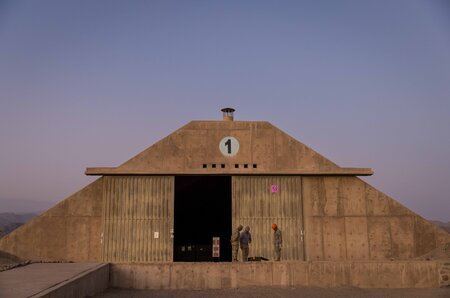
Emergency Preparedness and Response in case of Unplanned Explosions at Munition Sites (UEMS)
Format
In-person
Course available in
English
Duration
5 days
This course provides foundational training in emergency preparedness and response for potential unplanned explosions at munitions sites, addressing critical risks to both civilian populations and military personnel. It serves as an initial practical step toward strengthening national and local response systems, laying the groundwork for future exercises and improvements to emergency planning and regulatory frameworks.
Aim
The training aims to strengthen national capacities to assess, plan, and respond to incidents and emergencies at ammunition storage areas by applying the International Ammunition Technical Guidelines (IATG) across preparedness, interagency coordination, and post-incident recovery.
It seeks to test and improve emergency planning, command structures, and crisis management practices through simulated real-world response environments and hands-on, collaborative learning.
The training also aims to enhance multi-agency coordination at strategic, operational, and tactical levels, with selected international stakeholders invited to observe the process.
What you will learn?
- Enhance hazard awareness and preparedness in the event of an unplanned explosion at munition sites (UEMS) incident.
- Establish and manage effective on- and off-site command, control, and coordination during UEMS-related emergencies, and ensure unified public information and media communications.
- Plan and execute coordinated tactical response operations during UEMS-related emergencies.
- Plan and execute the transition from emergency response to recovery following the UEMS incident.
- Identify requirements and outline a comprehensive UEMS preparedness and response plan for the real-life case study in the Republic of Moldova.
Who should attend?
- Leaders and specialists with key roles and responsibilities of emergency responders, including hazmat and explosive ordnance disposal teams, incident command leadership and site management, search, rescue, and recovery operators, environmental protection and public health, local authorities/ administration, public institutions, and public affairs/ media relations.
Teaching approach
The training will apply a mixture of lectures and activities. The training modules will be delivered via a blend of:
- Lectures.
- Facilitated plenary discussions.
- Structured and guided scenario injects.
- Group exercises focused on mapping of the processes, roles, and regulatory frameworks.
- Peer review and After-Action Review sessions.
Assessment
There is no individual assessment during the course. Participants are awarded with a certificate of attendance.
Currently, no training sessions have been scheduled. Subscribe to GICHD news alerts below to receive updates on new courses.