
Stories from the Field
Teams around the world face challenges head-on, finding innovative ways to solve problems and make a difference. Stories from the Field shares their experiences, resilience, and moments of impact that inspire change and drive progress.
Meet Ara Martirosyan,
Chief Quality Inspector,
Center for Humanitarian Demining and Expertise of the Republic of Armenia
"It is one of those fields where, once you understand it, it draws you in"
It was my friends who told me the news that the Center for Humanitarian Demining and Expertise would open in our town, Ejmiatsin. It was very interesting. Something drew me in, even though I didn't fully understand what it was. I applied and was initially hired as the head of the logistics support team. A year later, I became more interested in field and practical operations. While working in logistics, I constantly encountered field operators and became interested in what they were doing. Step by step, it unfolded. First, I became a team leader, then a supervisor of operations, and I kept progressing.
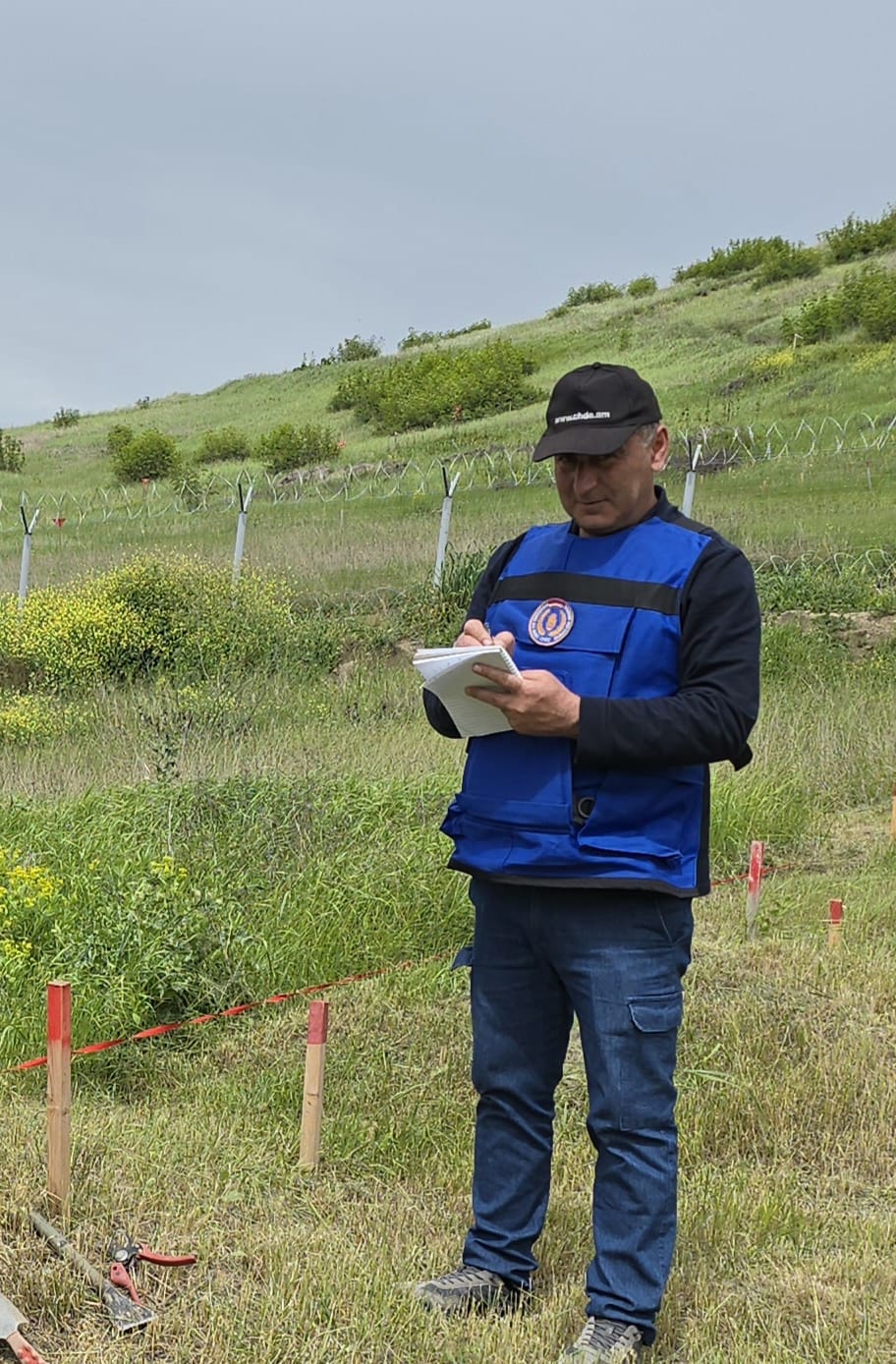
I became more intrigued by the standard procedures. Why is it done this way? How is it done? I can't really explain it, but a kind of passion and thrill ignited in me. To this day, I continue to live with that enthusiasm.
Before getting involved in mine action, I had my studies and other jobs. I led a very different life as a civilian. This field completely changed my way of thinking. I can no longer imagine how it would be possible to go back.
Field operations are full of interesting and unexpected moments. I will never forget when I was supervising field operations from a distance and noticed that one deminer had a constant detector signal. He kept digging and digging, until his patience ran out and he started stomping on that audio signal target, yelling, "Explode then! Go on, explode! Explode!"
Imagine being in my shoes at that moment. My eyes literally went dark. During my career I had many interesting moment
I approached him. Naturally, according to procedures, a reprimand and strict disciplinary measures followed. Looking back at it later, we started viewing it from another angle: the psychological aspect. That deminer was quite experienced and believed he could already tell from the signal what was underneath. He believed he could distinguish the different audio tones. But in any case, it was quite an experience.
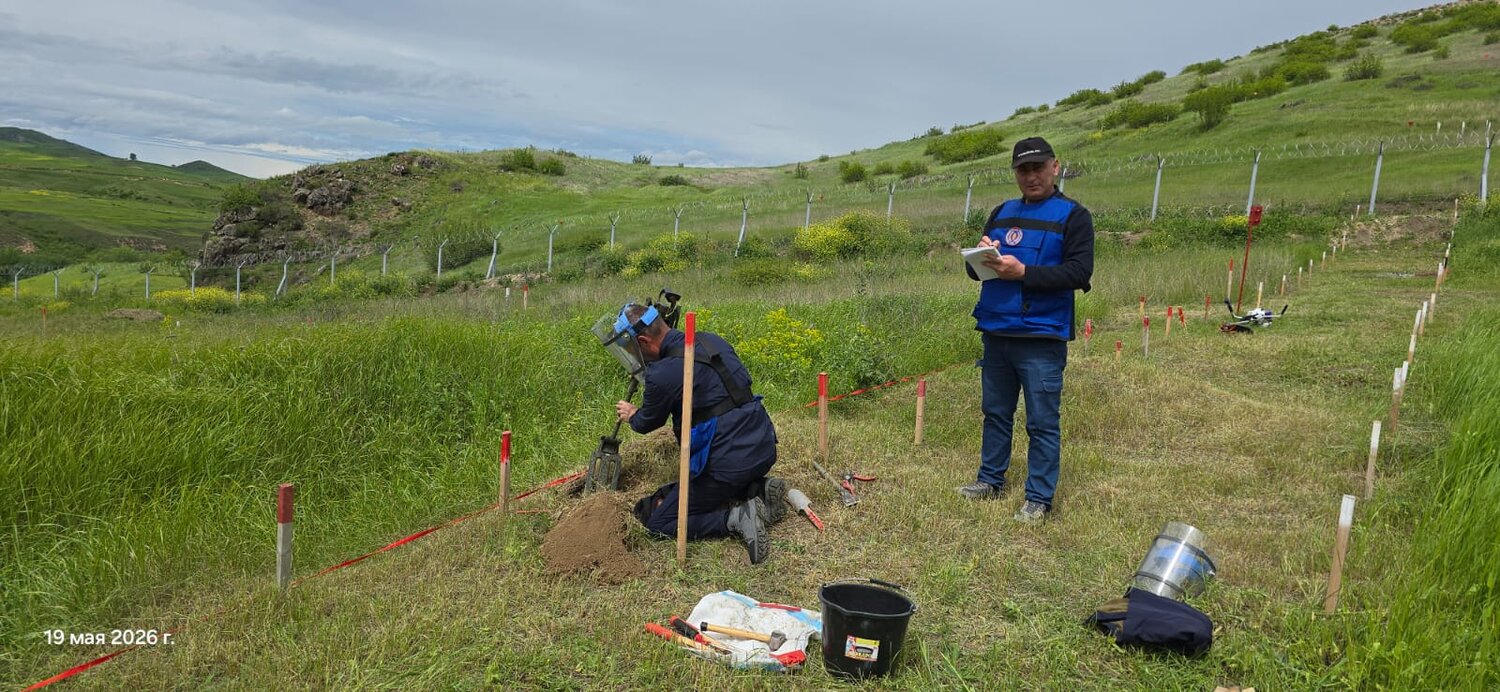
Regarding new methods, I would often approach a team and see that they were working in a different way, using some custom tool.
"What is this?"
"I made it myself, I use it like this...."
Later, we took those ideas, integrated the practices, and they proved effective. There were many similar cases.
When you go to a new, unfamiliar settlement, people approach you and ask questions. Before starting work, we also reach out to them. We explain what we are going to do and introduce ourselves and where we are from. Their most common question is: "What is that?"
You can't describe it in just one word. So, what I used to do was always invite them. I'd say, "Come over, I'll wait for you, meet you, and you can see for yourself."
That solved two issues at once. Community residents were directly involved in observing the progress of the operations. Sometimes we would look over and see them watching from another side, checking what was being done. They often knew better than me how many items were found, what was done, when the team left and when they returned.
The most interesting part was that after a while, a different kind of relationship developed. They would invite us over and ask, "How can we assist you?"
I won't forget when a joint project was being implemented with an international organisation in Armenia, around 2014 or 2015, in one of the villages in the south of the country. A private land plot was being cleared. For that task, the organisation had recruited the homeowner's grandson. The grandfather had previously been injured by an explosion in their own yard. The grandson, having completed the training, was then involved in clearing their own land and yard.
It was very moving and memorable. We stayed in touch for quite some time afterward.
It is one of those fields where, once you understand it, it draws you in. First of all, you interact with all the residents, with diverse personalities. Alongside that, you must have the capacity to drive the work forward properly without people getting distracted.
Sometimes it is the communities who evaluate the land even better, without metrics. The greatest evaluation is when we state, "This area has been cleared of hazards," and they clearly reply, "Yes, we agree," because they observed the entire process.
In August 2026, Ara participated in our Technical Working Group meetings on revising Armenian national mine action standards (NMAS), and on Mechanical Demining and the development of related Standard Operating Procedures. This activity was generously supported by the European Union Service for Foreign Policy Instruments.
---
From the field: Ara on working with the GICHD
"The GICHD is an organisation that opens a window and a door to see what is happening worldwide."
Building the systems behind the work
The GICHD Technical Working Group on revising national mine action standards (NMAS), and on Mechanical Land Release and the development of related Standard Operating Procedures (SOPs), was practical and tailored directly to the work on the ground.
I really liked the workshop format because we had a clear problem, constructive debate and healthy discussion. A localized solution was born, which we then anchored in the documents. It also provided an opportunity to better understand what is happening globally. The GICHD is an organisation that opens a window and a door to see what is happening worldwide.
Of course, we have a lot more to do. It doesn't end here. By staying in touch, we will exchange opinions and listen to feedback from the GICHD. Based on that, I am confident we will soon have solid, operational documents, both at the National Standards level and at the Standard Operating Procedures level.
NMAS and SOPs are of paramount importance to my role when it comes to organising, implementing, supervising and performing tasks safely and effectively. One document sets the requirements, and the other defines how they are executed. In terms of Quality Management, it is vital to have clear requirements to fulfil our tasks. We have made significant progress, and regarding the procedures, quality requirements were integrated across all operations. I value this very highly.
Crucially, the structure of this workshop team included the operators themselves, meaning everything was harmonised. We won't need the additional step of explaining the information to the field operators.
We are also really grateful to the European Union and all the stakeholders and participants who made it possible for the MV-4 and MV-10 mechanical demining machines to be provided to the Republic of Armenia.
Mechanical demining is a key component of mine action. Primarily, this machinery will help enhance the operational efficiency of mine action activities. Most importantly, it allows us to reach our strategic objectives faster and, in many cases, save resources in terms of time, finances and human power.
Naturally, this has enabled us to build our capacities. In parallel with acquiring this equipment, we are developing the corresponding standard procedures. The machines are already in Armenia, and their operations need to be regulated, including how they fit with other demining methods, particularly manual demining.
It is a new capability that we will develop, and I am confident it will yield great results. After some time, probably in about a year, we will have practical results and a year's worth of operational experience. That experience will allow us not just to draft, but to refine and amend the procedures and national standards created with the GICHD's support, based on our real-life practice.
"They are true humanitarians"
The GICHD is an organisation that supports the Armenian Centre for Humanitarian Demining and Expertise in every possible way. Not only with expertise, but by bringing people from all over the world together to think in one direction: how to save lives.
How do I evaluate GICHD's activities specifically for us? Extremely highly. Without that technical and professional support, it would have been very difficult for us to overcome many challenges.
Guidance, sharing experience and assistance, when you put all of that together, provide a massive opportunity to accomplish tasks safely and in a language everyone understands.
I am truly grateful and highly appreciate their work. And another key factor, I don't know what makes it so, but the entire GICHD staff I have interacted with has a distinct, genuinely humanitarian attitude.
They are true humanitarians.
I want to express my gratitude and wish all deminers around the world safety and good fortune. May they return home safely every single day, just as they set out for their missions.