In the mine action sector, as in so many others, efficiency is a central concern in operations. Efficiency in mine action is defined as a measure of how economically resources/inputs (funds,…
Introduction The GICHD issue briefs and statements listed below contribute to substantive discussions in mine action and ammunition management. Follow the GICHD on social media and check back here…
Land Release uses an evidence-based approach to more accurately differentiate between those areas that require clearance and those areas that do not. The process of gathering evidence…
Contaminated countries need a wide range of support to meet the challenges posed by explosive ordnance (EO), from capacity sharing across a range of topics, through to developing tailored solutions…
Clearance of landmines and Explosive Remnants of War (ERW) is a challenging, time-consuming and expensive activity utilizing manual deminers and the support of Animal Detection Systems (ADS),…
The International Mine Action Standards (IMAS) are the framework that make mine action efforts safe, effective, and efficient, both for the people doing the work and communities they serve. For…
Overview GICHD Innovation Conference Report The GICHD Innovation Conference 2023, scheduled to take place from 14 to 16 of November 2023, in Geneva, will showcase new technologies and…
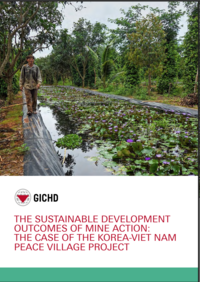
The Sustainable Development Outcomes of Mine Action: The Case of the Korea-Vietnam Peace Village Project The Korea Viet Nam Peace Village Project (KVPVP) offers a new, integrated approach to these…