

Foreword
"The GICHD will continue to connect operational experience with global dialogue, ensuring that knowledge is effectively translated into practical support for those working to reduce risk and protect communities."
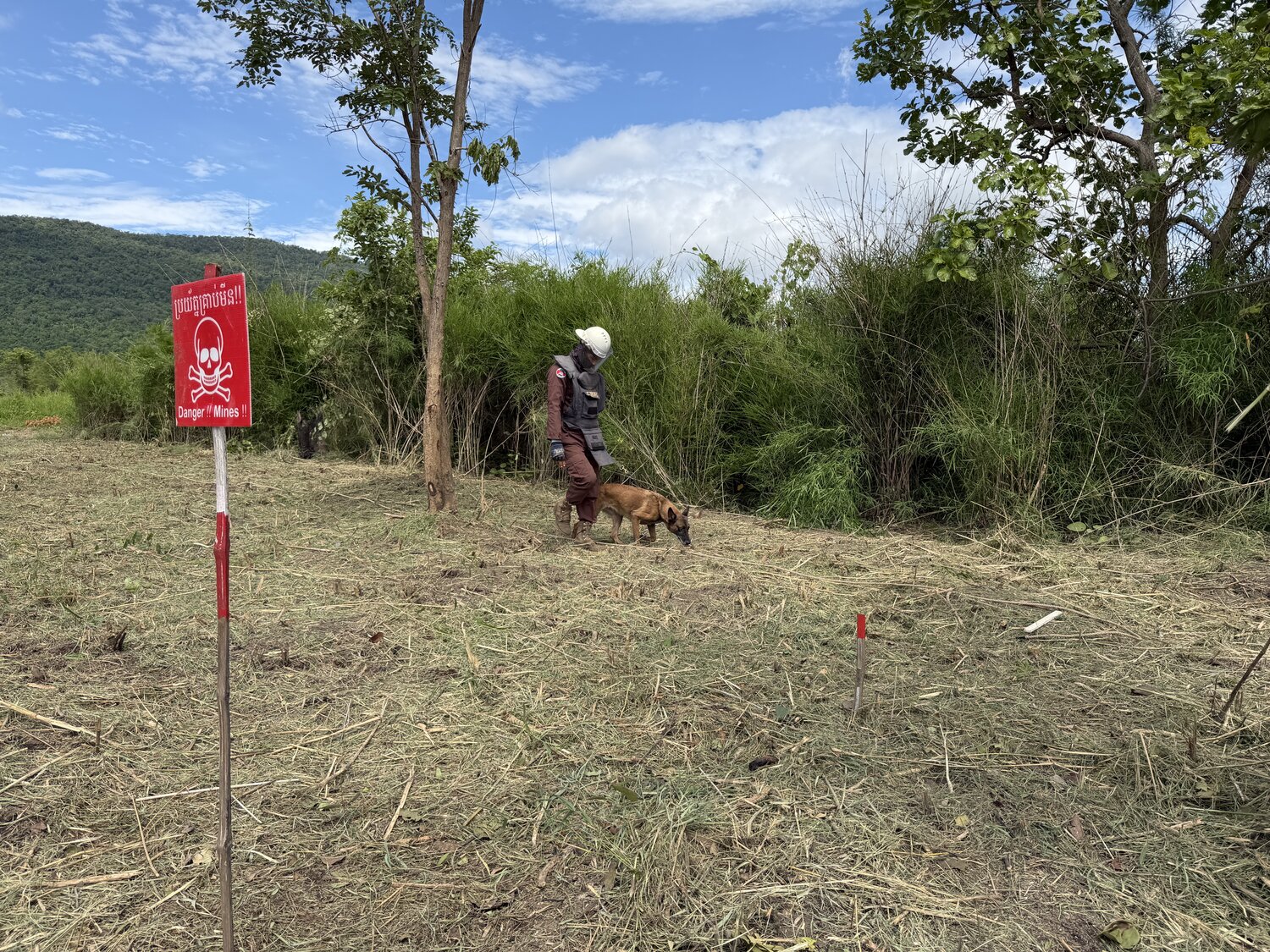
Landmines, cluster munitions, and other explosive ordnance threaten people every day in more than 60 countries and territories. Armed conflicts are on the rise, and we live in one of the most conflict-intensive periods since World War II.
These developments reaffirm the importance of the Geneva International Centre for Humanitarian Demining (GICHD) as an independent and trusted partner – and they require us to reflect on how we work. Some countries – such as Ukraine – have to address the threats posed by explosive ordnance in an ongoing conflict. In other countries – such as Syria – the end of a conflict has created the preconditions for mine action, but the necessary infrastructure and procedures are still in the process of being established. All these numerous challenging contexts require us to engage more closely with national authorities and partners on the ground. This is one of the reasons why the GICHD established a Regional Office for the Middle East and North Africa in Amman in July 2026.
Our new Strategy sets out the direction for the period 2027–2030. It builds on the experience of previous strategic cycles and reflects what we have learned since our creation in 1998. We will support and enable effective national ownership, recognising that strong and accountable national institutions are the foundation of sustainable mine action.
We will further strengthen technical expertise and professional practice, and continue to contribute to the development and implementation of international normative frameworks. We will also promote greater coherence and complementarity across humanitarian, development and peace efforts, recognising the importance of integrated and context-sensitive responses.
The new GICHD Strategy reflects both ambition and commitment and is firmly anchored in our core mission: Supporting nationally owned mine action and ammunition management responses.
Inclusion and localization will remain key principles in this engagement.
In the new strategic period, we will also heavily invest in innovation, research and information management, ensuring that new approaches are informed by operational realities and contribute to tangible improvements in practice.
We are conscious that these objectives cannot be achieved by any one institution alone. The challenges posed by explosive ordnance are complex and interconnected, and addressing them requires strong partnerships and shared expertise.
The GICHD will continue to connect operational experience with global dialogue, ensuring that knowledge is effectively translated into practical support for those working to reduce risk and protect communities.
In an uncertain environment, we remain committed to make a meaningful contribution to improving the safety, security and well-being of people affected by explosive.
Why this strategy
The changing landscape of conflict and contamination
During the previous strategic period (2023–2026), armed conflicts have reached their highest levels in decades. Often, the work of the Geneva International Centre for Humanitarian Demining (GICHD) in mine action and ammunition management takes place in environments characterized by violence and instability.
61
state-based conflicts across 36 countries in 2024
57%
incidents associated with unsafe ammunition management between 2020 and 2024
22%
increase in casualties caused by explosive ordnance in 2023 and 9 % in 2024
1,259
casualties caused by unsafe ammunition management between 2020 and 2024
Our work is rooted in a people-centred approach, supporting responses that are nationally led, context-specific, and aligned with international frameworks and standards.

VISION
A world where people live free from the consequences of explosive ordnance.

MISSION
We support nationally owned, context-specific mine action and ammunition management responses.
Strategic objectives
Four objectives, eleven results
Three external objectives set out the change we want to support. A fourth, internal objective makes sure that GICHD is equipped to deliver them.


1
National ownership
Enable effective national ownership of responses to explosive ordnance
Effective national ownership depends on three foundations:clear frameworks, strong national institutions and capacities, and implementation that reflects the different needs and priorities.
Result 1.1
National frameworks are developed, adopted, revised and implemented
Result 1.2
National capacities and systems are established, enhanced and sustained
Result 1.3
National responses are inclusive and localized
2
Strengthened expertise
Strengthen local, regional, and global expertise, practice and coordination to improve responses to explosive ordnance
Measurable progress depends on practical innovation, strong technical practice, trusted international standards and guidelines as well as sustainable and innovative funding solutions.
Result 2.1
Innovation and research improve explosive ordnance responses
Result 2.2
Technical advice improves explosive ordnance responses
Result 2.3
International standards and guidelines remain up-to-date and relevant
3
Normative frameworks
Support the development and implementation of international normative frameworks and links explosive ordnance responses with broader human rights, humanitarian, development and peace frameworks
The GICHD will continue to engage in humanitarian and disarmament conventions, as well as related international and regional processes linked to humanitarian, development, and peace efforts.
Result 3.1
International humanitarian law instruments and multilateral processes related to conventional arms and ammunition are informed by technical expertise
Result 3.2
Mine action and ammunition management are integrated with human rights, humanitarian, development, and peace frameworks
4
Organisational resilience
Ensure organisational efficiency and resilience
To provide high-quality support in complex and changing environments, the GICHD must remain a resilient, efficient, financially stable, and peoplefocused institution.
Result 4.1
Financial stability supports sustained delivery through diversified funding and responsible financial management
Result 4.2
The Centre has a competent, engaged, and diverse workforce supported by an inclusive and enabling organizational culture
Our values
What guides how we work
Our core values guide how we work with each other, with our partners, and with the communities we serve.

Trust
We work with utmost integrity, communicating transparently and honestly.

Respect
We are collaborative, valuing diverse perspectives with a compassionate and empathetic mindset.

Inclusion
Diversity, equality and inclusion are central to who we are and how we work.

Accountability
We are accountable to each other, our partners and those who support us, driven by needs and impact.

Agility
We adapt to changing environments, responding flexibility and effectively to emerging challenges and opportunities.

Creativity
We embrace new ideas, encourage curiosity, challenge assumptions, and seek practical solutions to complex problems.
Our principles
In delivering this stragey, we will
- Uphold the humanitarian principles of humanity,neutrality, impartiality, and independence.
- Apply conflict-sensitive, age-, disability-, and gender-responsive approaches that reduce risks and do no harm.
- Support inclusion, protection, prevention, and recovery.
- Integrate environmental and climate considerations across the Centre’s work, supporting sustainable approaches, where feasible.
- Focus on achieving measurable results through an efficient use of resources and a results-based approach.
- Promote innovation and strengthen competencies through high-quality, evidence-based approaches, learning, and responsible use of technology.
Strategy implementation
Putting the strategy into practice
Globally connected, locally engaged
From International Geneva, we will continue to connect operational experience from affected countries and territories with global expertise.
Managing risks and adapting to change
To remain effective, we adopt a proactive and adaptive approach to risk management.
Monitoring, evaluation and learning
We use a results-based management approach to plan, monitor, and report on the delivery of our Strategy.
Communication and public engagement
We will continue to translate complex technical work into insights that support decision makers, partners, donors, the media, and the wider public.
PDF Download
Read the full GICHD Strategy 2027-2030