
Meet Fadi Al Saleh
The head of the Syrian Mine Action Center, under the Ministry of Emergency and Disaster Management.
After conducting many visits to different areas in Syria in my new role with the Syrian Mine Action Center, I saw the scale and complexity of the contamination.
In 2012, when the revolution began, it quickly escalated to an armed conflict. I had no choice but to flee with my family from the Al-Jazeera region, where I worked for a Syrian oil transport company, to Turkey. When we returned, things had deteriorated, so we moved again to a village near the mountainous Darkoush.
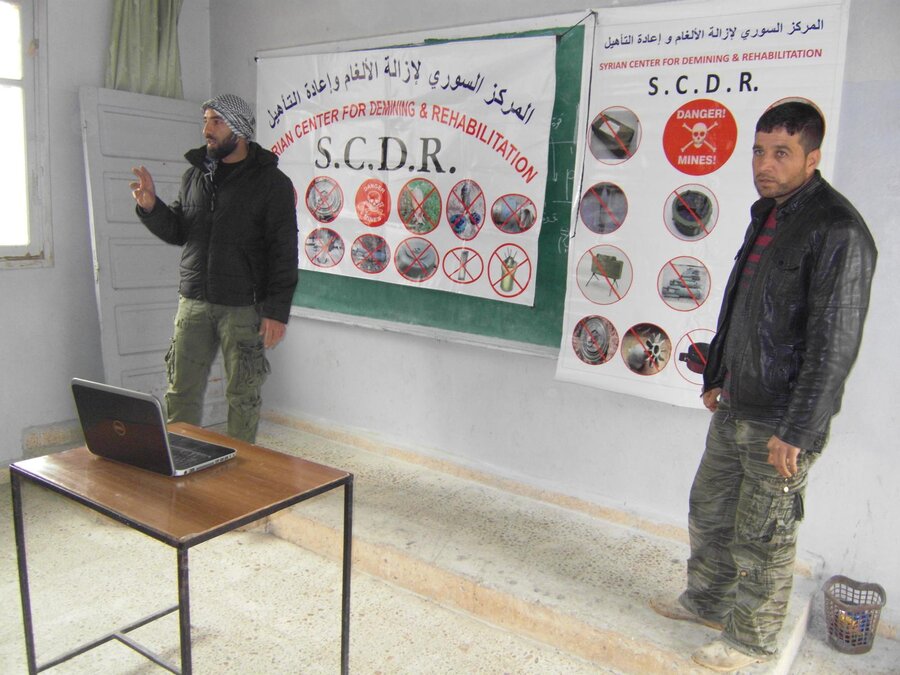
One day, an air bomb cut off the roads to the area, leaving only one road for us to get necessities, like a loaf of bread. The region had absolutely nothing; no firefighting, no search and rescue, no awareness or safety programs. I met with others to find solutions, and we decided to form a small mine action unit. With two friends, we started volunteering. We made brochures about the dangerous explosive ordnance, reaching out to schools to conduct awareness campaigns, and reaching out to get training from outside of Syria. We continued for three years, then eventually we got some support and could buy a car, print more brochures and visit more schools and community areas.
People were desperate, blocked roads, and lives at risk, just trying to survive. It was a very hard period because we had no support. It even caused tension at home, we needed to eat and drink, while all my time was devoted to this volunteer work. I stepped away for a year because of my family responsibilities. I have two children, and in those conditions, bread was not guaranteed. While I supported my family by working in trade for a while, with a business selling bracelets made by my wife, the situation did not improve. However, the friend I had started this action with — Raed Al Saleh who is now Minister of Emergency and Disaster Management — kept up the operations, expanding the volunteer work into a more structured civil defense effort, including landmine and other explosive ordnance removal. He asked me to come back, and things grew from there.
The civil defense teams needed uniforms, we started with a small sewing workshop. I became production manager, later managing the full production department, and not just for clothing; we produced fire extinguishers, then oxygen tanks for hospitals, and more. We sent individuals to Turkey to receive training in explosive ordnance risk disposal, and casualty evacuation. They returned to Syria to train local teams. When areas of Syria were liberated, we transitioned our efforts to the Syrian Mine Action Center, continuing our work nationally even before any official recognition.
This work is complex. It is not just technical operations on the ground; it is managing the entire sector. You need to understand different types of mines and explosive ordnance, handle operations across different fronts, and integrate mine action into Syria’s development plans. After conducting many visits to different areas in Syria in my new role with the Syrian Mine Action Center, I saw the scale and complexity of the contamination. We realized we were still in the most difficult phase. These visits reveal how dangerous the situation still is, and the need for strong international support.
Partnership is critical now. International or domestic workers in mine action may feel there is a barrier between us and them, that we, as an organization, are like a State. I try to tell them we are partners, with a shared humanitarian goal. We must all work together, openly, without ego, to succeed. We emphasize cooperation between local and international actors, the government, NGOs, and others in the sector. No single party owns it. This participatory approach is the only way to succeed in mine action. We hope support continues for local organizations on the ground.
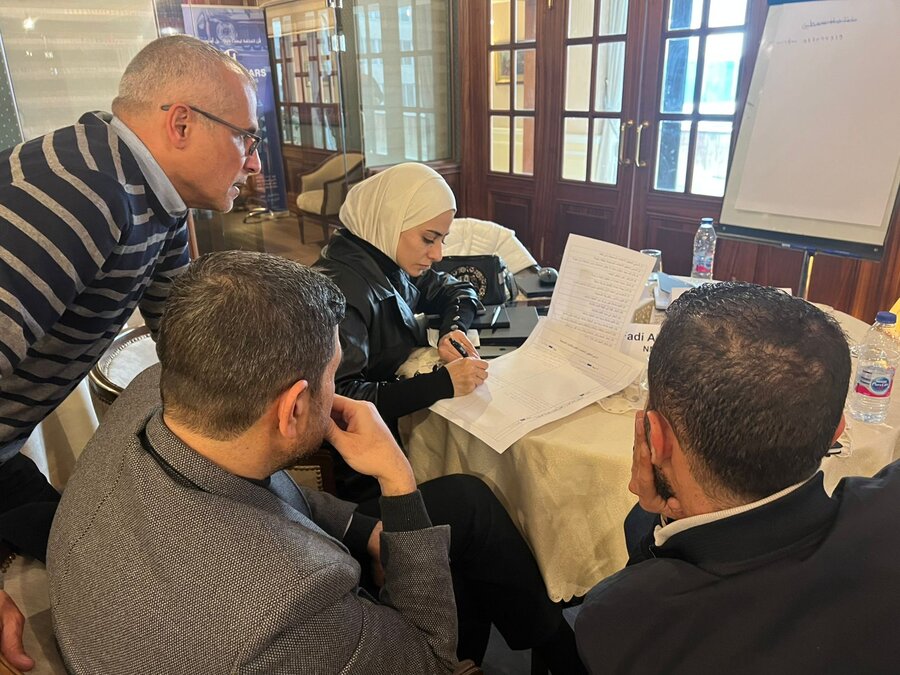
While participating in our Mine Action Managers Training in Damascus in January 2026, Fadi Al Saleh took the time to tell us his story about how he went from running a small local mine action operation to leading mine action operations for Syria.